
 Text
Text
Your heat pump is supposed to keep you warm, but instead, you’re feeling a cold breeze from the vents. That doesn’t seem right.
Before you panic, here’s what you need to know: that “cold” air might not be a problem at all. In fact, your heat pump could be working exactly as designed. But there are also real issues that need attention, and we’re going to help you figure out which situation you’re in.
Sacramento winters are mild compared to other parts of the country, but when your heating system isn’t performing the way you expect, it can leave you confused and uncomfortable. Let’s clear up what’s normal, what’s not, and when to call for help.
Why Your Heat Pump Feels Cooler Than a Furnace (And That’s Completely Normal)
If you’ve recently switched from a gas furnace to a heat pump, you might notice something different. The air coming from your vents doesn’t feel as hot.
Here’s why: heat pumps typically deliver air at 85 to 95 degrees Fahrenheit. That’s warm enough to heat your home effectively, but it’s significantly cooler than the 120 to 140 degrees that gas furnaces produce.
Since your body temperature is around 98.6 degrees, heat pump air can actually feel lukewarm or even cool to your hand when you hold it near a vent. But don’t let that fool you. The system is still transferring heat into your space and raising the temperature in your home.
At Atticman Heating and Air Conditioning, Insulation, we explain this difference to many Sacramento homeowners making the switch. It’s one of the most common concerns we hear, and once people understand how heat pumps work, they realize there’s nothing wrong with their system.
The key difference? Heat pumps transfer heat from outside air instead of burning fuel to create heat. That’s why the supply air temperature is lower, but it’s still doing the job of keeping your home comfortable.
What This Means for You
If the air from your vents feels lukewarm but your thermostat shows the room temperature is rising to your set point, your heat pump is working just fine. Give it time to do its job. Heat pumps take a bit longer to warm up a space than furnaces, but they’re more energy-efficient and work well in Sacramento’s mild climate.
The Defrost Cycle: When Cold Air Is Actually a Good Sign
Now let’s talk about the other time your heat pump might blow cold air, and this one trips up almost everyone.
Your heat pump has a built-in defrost mode, and when it activates, you’ll feel cold air for a short period. This is completely normal and actually shows your system is protecting itself.
Here’s what happens: When your heat pump pulls heat from outdoor air, the outdoor coil can get 10 degrees colder than the outside temperature. During cold, humid conditions, moisture condenses and freezes on the outdoor coil fins. If that ice builds up, your system can’t work efficiently.
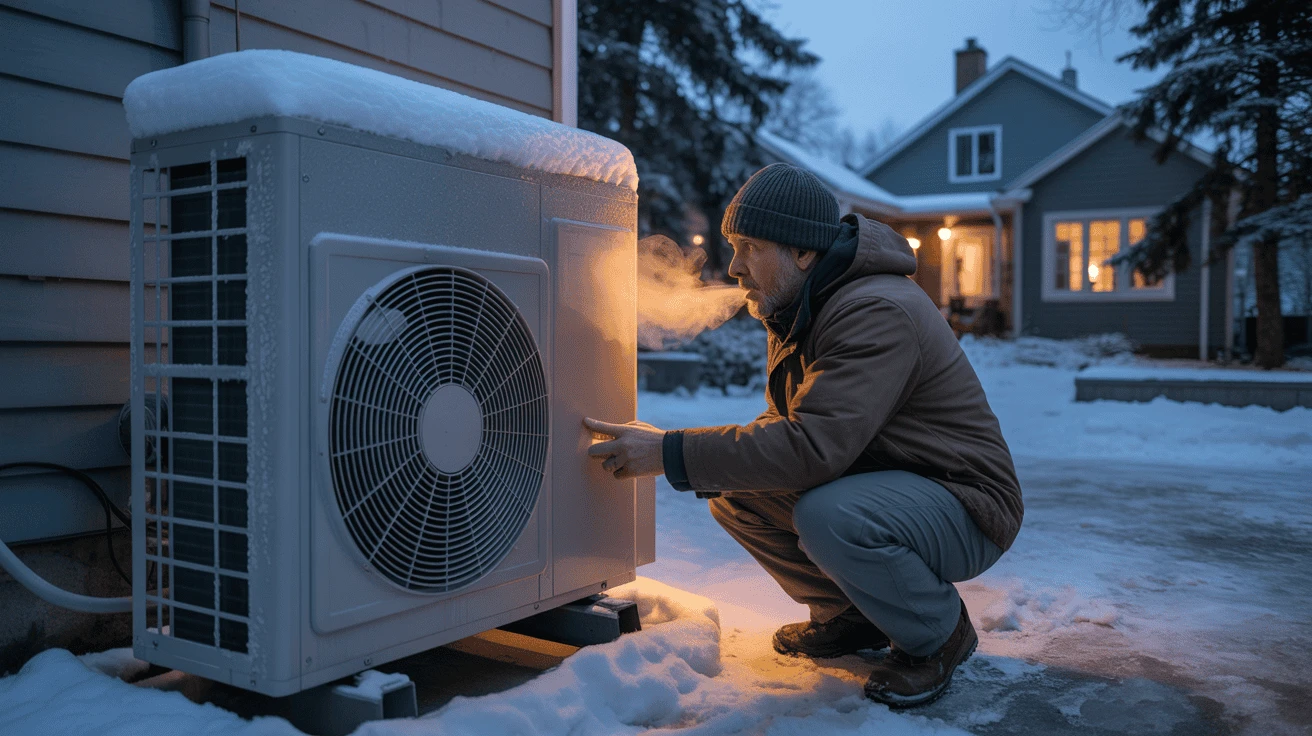
To fix this, your heat pump temporarily reverses its operation. It switches into cooling mode for about 5 to 15 minutes, sending warm refrigerant to the outdoor unit to melt the ice. During this time, the air blowing inside feels cold or room temperature.
Most heat pumps check for frost every 30 to 90 minutes during heating mode, and they’ll trigger a defrost cycle when sensors detect ice buildup.
When Does Defrost Mode Happen?
You’re most likely to notice defrost cycles when:
- Outdoor temperatures are between 32 and 45 degrees Fahrenheit
- It’s humid or damp outside
- The heat pump has been running continuously
Homeowners are often surprised to see defrost mode activate when outdoor temperatures are in the 40s, but remember, the coil surface is much colder than the surrounding air.
In Sacramento and nearby areas like Roseville, Folsom, and Elk Grove, our winters are mild but can be damp. That combination creates perfect conditions for occasional frost, so don’t be alarmed if you experience defrost cycles.
Signs Your System Is in Defrost Mode
- Cold or lukewarm air from vents for 5 to 15 minutes
- The outdoor unit stops running temporarily
- You might hear a swooshing sound as the system reverses
- Steam rising from the outdoor unit as ice melts
If the cold air lasts longer than 15 minutes, that’s when you should investigate further.
Understanding the 2025 Refrigerant Changes and What They Mean for You
Something important changed on January 1, 2025, and it affects anyone buying a new heat pump or needing heat pump repair.
All new heat pumps and air conditioners manufactured after this date must use low-GWP refrigerants like R-454B or R-32, replacing the old R-410A refrigerant. These newer refrigerants have about 75% lower global warming potential, which is better for the environment.
If you already own a heat pump, nothing changes. Your existing system continues to work with R-410A, and you can still get it serviced. But if you’re shopping for a new system or need refrigerant added, here’s what you need to know.
What Makes These New Refrigerants Different?
The new A2L refrigerants (R-454B and R-32) are classified as “mildly flammable,” though they’re still very safe when handled properly by trained professionals. They perform as well or better than R-410A in cold weather, so you won’t notice any difference in how your heat pump heats your home.
But here’s the critical part: only EPA-certified technicians can work with these refrigerants. DIY refrigerant work has always been illegal, but now it’s even more important to leave it to the professionals.
How This Relates to Cold Air Issues
Low refrigerant remains one of the top causes of heat pumps blowing truly cold air. When your system doesn’t have enough refrigerant, it can’t transfer heat effectively, and the air coming from your vents will be cold.
If you have a newer 2025-compliant system and suspect a refrigerant issue, contact a licensed technician who’s trained to handle A2L refrigerants. At Atticman Heating and Air Conditioning, Insulation, we’re equipped to service both older R-410A systems and the new 2025-compliant models throughout Sacramento and surrounding communities.
Real Problems That Cause Continuous Cold Air
Now we get to the issues that actually need fixing. If your heat pump is blowing cold air continuously, not just during defrost cycles, something’s wrong.
Thermostat Settings
Before anything else, check your thermostat. It sounds simple, but this fixes the problem more often than you’d think.
Make sure:
- The system is set to “HEAT,” not “COOL”
- The fan is set to “AUTO,” not “ON”
- The temperature is set 3 to 5 degrees above the current room temperature
When the fan is set to “ON,” it runs constantly and blows unheated air between heating cycles. That creates the feeling of cold air even though the system is working.
Low Refrigerant from a Leak
This is one of the most common real problems. If your heat pump has a refrigerant leak, it can’t transfer enough heat, and the air from your vents will be cold.
Signs of low refrigerant include:
- Continuously cold air from vents
- Ice buildup on the indoor coil
- The outdoor unit running constantly but not heating effectively
- Higher energy bills without increased comfort
Refrigerant doesn’t get “used up” like gas in a car. If levels are low, there’s a leak somewhere. A technician needs to find the leak, fix it, and recharge the system with the correct amount of refrigerant.
Never attempt to add refrigerant yourself. It’s illegal without proper certification, and incorrect handling can damage your system and harm the environment.
Stuck or Faulty Reversing Valve
The reversing valve is what allows your heat pump to switch between heating and cooling. If this valve gets stuck or fails, your system might remain in cooling mode even when it should be heating.
You’ll notice:
- Cold air blowing when the thermostat is set to heat
- The system runs but provides no warmth
- Unusual clicking or hissing sounds from the outdoor unit
This requires professional repair. The valve itself might need replacing, or there could be an electrical issue preventing it from switching modes properly.
Dirty Filters and Blocked Airflow
Clogged air filters restrict airflow, which creates a domino effect of problems. When air can’t flow freely, your heat pump has to work harder, indoor coils can freeze, and the defrost cycle triggers more frequently.
Replace or clean your air filter every 1 to 3 months, depending on usage and whether you have pets. This simple step prevents many heating issues and keeps your system running efficiently.
Also check that:
- Vents and registers aren’t blocked by furniture or curtains
- The outdoor unit has at least 2 to 3 feet of clearance on all sides
- No leaves, debris, or snow are blocking the outdoor coil
Balance Point Issues (Rare in Sacramento)
Some older heat pump models have a “balance point,” the outdoor temperature at which they can no longer heat effectively on their own. This is typically between 25 and 35 degrees Fahrenheit.
In Sacramento’s climate, where average winter lows stay between 40 and 45 degrees and rarely drop below freezing, this is almost never an issue. Our mild winters are actually ideal for heat pump performance.
If you live in foothill areas like Placerville or Auburn where temperatures can drop more, you might occasionally experience this. Modern heat pumps handle cold weather much better than older models, but if your system is over 15 years old, it might struggle on the coldest nights.
Sacramento’s Perfect Heat Pump Climate
Sacramento offers nearly ideal conditions for heat pumps. Our winters are mild, with average lows in the low 40s and rare freezes. This means:
- Your heat pump operates efficiently most of the winter without needing backup or auxiliary heat
- Defrost cycles are less frequent than in colder, more humid climates
- Energy savings are significant compared to traditional furnaces
Areas we serve, including Citrus Heights, Elk Grove, Roseville, Folsom, and Rancho Cordova, all share this mild climate. Heat pumps make sense both for comfort and for your energy bills in this region.
The damp winters we sometimes experience can trigger defrost cycles, but as we covered earlier, that’s normal and temporary.
What You Can Safely Check Before Calling a Pro
If your heat pump is blowing cold air, here’s what you can safely troubleshoot yourself:
- Verify your thermostat settings – Confirm it’s set to HEAT, fan is on AUTO, and the temperature is set higher than the current room temperature.
- Check your air filter – Replace it if it’s dirty or clogged. This takes about 5 minutes and can solve many issues.
- Look at the outdoor unit – Make sure it’s not covered in snow, leaves, or debris. Clear anything blocking airflow, but don’t touch the coils themselves.
- Time any cold air episodes – If cold air only lasts 5 to 15 minutes and you see ice melting on the outdoor unit, it’s just a normal defrost cycle.
- Listen for unusual sounds – Grinding, squealing, or loud banging noises indicate a mechanical problem that needs professional attention.
What you should NOT do:
- Don’t touch refrigerant lines or attempt to add refrigerant
- Don’t remove panels or access electrical components
- Don’t spray water on a frozen outdoor unit to try to melt ice faster
- Don’t continue running a system that’s clearly malfunctioning
When to Call Atticman Heating and Air Conditioning, Insulation
Contact us immediately if you experience any of these situations:
- Cold air continues for more than 15 minutes outside of defrost cycles
- The outdoor unit is heavily iced over and not defrosting
- You hear unusual grinding, squealing, or banging noises
- Your energy bills have spiked without explanation
- The system cycles on and off rapidly
- There’s ice forming on the indoor coil
We serve Sacramento and surrounding communities including Antelope, Auburn, Carmichael, Citrus Heights, Davis, El Dorado Hills, Elk Grove, Fair Oaks, Folsom, Galt, Granite Bay, Lincoln, Lodi, Orangevale, Placerville, Rancho Cordova, Rocklin, Roseville, and West Sacramento.
Our team handles both legacy R-410A systems and new 2025-compliant heat pumps with A2L refrigerants. We’re trained on the latest EPA regulations and equipped to diagnose and repair any heat pump issue.
We offer no-charge diagnostic services so you understand exactly what’s wrong before committing to repairs. We believe in transparent pricing, punctual service, and making sure you’re comfortable in your home.
Ready to Get Your Heat Pump Working Right?
Don’t spend another day wondering why your heat pump is blowing cold air. Whether it’s a simple thermostat adjustment or a refrigerant leak that needs professional repair, we’re here to help.
At Atticman Heating and Air Conditioning, Insulation, we provide quality AC repair, installation, and maintenance services throughout the Sacramento region. We understand how heat pumps work in our local climate, and we’re committed to getting your system back to peak performance quickly.
Call us today or visit our website to schedule your no-charge diagnostic consultation. We’ll identify the problem, explain your options clearly, and get your home comfortable again.
Frequently Asked Questions About Heat Pumps Blowing Cold Air
How can I tell if my heat pump is in defrost mode?
Look for these signs: the outdoor fan stops running, you might hear a swooshing sound as the system reverses, cold air blows from vents for 5 to 15 minutes, and you may see steam rising from the outdoor unit. The cycle should complete within 15 minutes and happen no more than every 30 to 90 minutes.
Is it normal for heat pumps to feel cooler than furnaces in Sacramento?
Yes, completely normal. Heat pumps deliver air at 85 to 95 degrees Fahrenheit, while furnaces blow air at 120 to 140 degrees. Both heat your home effectively, but heat pump air feels cooler to the touch. As long as your room reaches the thermostat’s set temperature, your system is working correctly.
What’s the difference between R-410A and the new 2025 refrigerants?
The new R-454B and R-32 refrigerants mandated after January 1, 2025, have about 75% lower global warming potential than R-410A. They perform similarly or better in cold weather but are mildly flammable, requiring specially trained technicians for installation and service. Existing systems using R-410A can continue operating and be serviced normally.
How often should my heat pump go into defrost mode during Sacramento winters?
In Sacramento’s mild winters, defrost cycles are relatively infrequent. You might notice them during damp conditions or when temperatures drop into the low 40s or below. If your system defrosts more than once every 30 minutes or stays in defrost mode longer than 15 minutes, contact a professional.
Can I fix low refrigerant in my heat pump myself?
No. Working with refrigerants requires EPA certification and specialized equipment. It’s illegal for unlicensed individuals to purchase or handle refrigerants. If you suspect low refrigerant, contact a licensed HVAC technician in Wilton who can properly diagnose the leak, repair it, and recharge your system.
Why does my heat pump blow cold air only on certain days?
If your heat pump only blows cold air on specific days, check the weather conditions. Defrost cycles happen more often during damp, cool weather. Also verify your thermostat settings haven’t changed. If the pattern doesn’t match weather conditions, there may be a sensor or control board issue that needs professional diagnosis.
Do heat pumps work well in foothill areas like Placerville and Auburn?
Modern heat pumps perform well even in the cooler foothill areas around Sacramento. While these areas see colder temperatures than the valley floor, they rarely drop low enough to challenge a properly sized heat pump. If you’re in a foothill location, make sure your system is rated for cold-climate performance.
What’s the best way to maintain my heat pump to prevent cold air problems?
Replace air filters every 1 to 3 months, keep the outdoor unit clear of debris with 2 to 3 feet of clearance, schedule annual professional maintenance, and address any performance issues immediately rather than waiting. Regular maintenance prevents most problems and extends your heat pump’s lifespan.