
 Text
Text
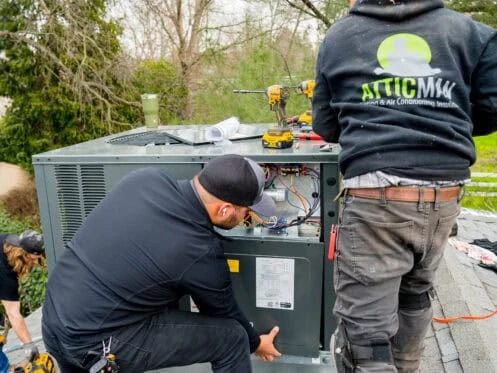
Buying a new HVAC system is one of the biggest home investments you’ll make. Get it right, and you’ll enjoy lower energy bills, consistent comfort, and peace of mind for years. Get it wrong, and you could be stuck with a system that runs up your electricity bill, breaks down early, or never quite keeps up on a 100°F Sacramento afternoon.
At Atticman Heating and Air Conditioning, Insulation, we’ve worked with homeowners across Sacramento, Elk Grove, Roseville, Folsom, and surrounding areas who’ve come to us after a bad HVAC experience. Most of the time, the problems trace back to skipping one of the steps we’re about to walk you through.
Here’s what you actually need to know before signing any contract.
1. Size the System Correctly (This Is the Biggest Mistake Homeowners Make)
Before anything else, your contractor should be running a Manual J load calculation on your home. This is the industry-standard method developed by the Air Conditioning Contractors of America (ACCA) that calculates exactly how much heating and cooling your home needs.
Why does it matter so much? Because guessing gets it wrong.
A lot of contractors use a simple rule of thumb: one ton of AC per 400–600 square feet. That sounds easy, but it often leads to systems being oversized by 20–50%, according to DOE installation practice reviews and the Midwest Energy Efficiency Alliance.
An oversized system causes:
- Short cycling (turns on and off too frequently)
- Poor humidity control, which makes your home feel sticky
- Higher energy use (up to 10–15% more)
- Uneven temperatures room to room
- More wear and tear, shortening the system’s life
For Sacramento-area homes, this matters even more. The cooling design temperature here runs around 95–98°F, and factors like your home’s age, insulation quality, window placement, and sun exposure all change what size system you actually need. A home in Elk Grove with older insulation and west-facing windows has completely different needs than a newer build in El Dorado Hills.
What to do: Ask your contractor to show you the completed Manual J report before they quote you anything. If they won’t, that’s a red flag (more on those later).
2. Understand SEER2 Ratings and What They Mean for Your Monthly Bill
You’ll see efficiency ratings on every system. The current standard is SEER2, which replaced the old SEER metric in 2023. The update was designed to reflect real-world performance more accurately, using higher static pressure in testing conditions.
Higher SEER2 = lower electricity use per unit of cooling.
Here’s what the minimum requirements look like in California:
| System Type | Minimum SEER2 (Under 45k BTU) | Minimum SEER2 (45k BTU and above) | HSPF2 (Heat Pumps) |
| Split AC / Heat Pump (Southwest region, CA) | 14.3 | 13.8 | 7.5 |
| Packaged Units (Nationwide) | 13.4 | 13.4 | 6.7 (varies) |
Source: DOE / California Energy Commission, 2026
The California minimum is 14.3 SEER2 for most residential split systems. But here’s the thing: installing the minimum-efficiency system to save money upfront often costs more over time in energy bills.
Systems rated 16–20+ SEER2, especially those with variable-speed technology, deliver measurable monthly savings through reduced runtime and better part-load performance. They also handle humidity better, which is a real comfort factor during Sacramento’s humid summer evenings.
According to Trane’s technical resources, higher SEER2 units pair well with smart thermostats for time-of-use savings, which is especially valuable if you’re on SMUD’s rate schedule.
Rebate tip: SMUD (Sacramento Municipal Utility District) requires at least 15.2 SEER2 on qualifying two-stage or variable-stage heat pumps to access their rebate program. As of early 2026, qualifying heat pump replacements can receive up to $3,000 in rebates through SMUD (verify current availability at smud.org, as programs are first-come, first-served and funding can change).
3. Choose the Right System Type for Sacramento’s Climate
Not every system type fits every home or climate. Here’s a straightforward breakdown:
Split Systems The most common setup: an outdoor condenser paired with an indoor air handler. Works well for central heating and cooling when you have existing ductwork. Delivers excellent efficiency when ducts are properly sealed.
Packaged Units All components sit outside (rooftop or ground-mounted). Good option for homes with limited indoor space, like some slab-foundation properties in Carmichael or Citrus Heights. Slightly lower efficiency potential than split systems.
Heat Pumps (Ducted or Ductless) Heat pumps transfer heat rather than generating it, which makes them highly efficient. They handle both cooling and heating, and they work especially well in Sacramento’s climate: hot summers and generally mild winters.
Sacramento’s weather pattern is one of the reasons heat pump adoption has grown quickly here. Consumer Reports and several 2026 buying guides highlight variable-speed models for their quiet operation and zoning capability. For homes in areas like Davis, West Sacramento, or Rancho Cordova with mild winter temperatures, a heat pump can handle year-round comfort without backup heat in most conditions.
Ductless Mini-Splits A good fit for additions, converted garages, or rooms that need independent temperature control. No ductwork required.
Hybrid/Dual-Fuel A heat pump paired with a gas furnace backup. Less commonly needed in the Sacramento area given the mild winters, but worth asking about if you have specific concerns about cold snaps.
One thing that gets overlooked: your ductwork matters as much as the system. Leaky or undersized ducts can waste more than 20% of conditioned air, according to DOE resources. Any reputable contractor should inspect your existing ducts before assuming they’re fine.
If you’re weighing system types and want to see what fits your home, check out our AC installation services in Sacramento to get a clearer picture of your options.
4. Installation Quality Makes or Breaks Your System
You can buy the most efficient system on the market and still end up disappointed if the installation is done poorly.
Common installation mistakes include:
- Incorrect refrigerant charge (too much or too little cuts efficiency significantly)
- Skipping duct sealing or insulation
- Failing to verify airflow after installation
- Not performing proper commissioning and startup testing
Research from DOE installation practice reviews shows that poor installation can reduce a system’s rated efficiency by 20% or more. It can also void your manufacturer warranty, leaving you without coverage when something goes wrong.
What to look for in a contractor:
- NATE certification (North American Technician Excellence), a recognized industry standard
- California C-20 HVAC license (required by state law for HVAC work in CA)
- Proper insurance and liability coverage
- Willingness to pull permits (required for most replacements)
- Post-installation documentation, including startup report and airflow verification
At Atticman Heating and Air Conditioning, Insulation, we pull permits, verify refrigerant charge, and provide post-install documentation as standard practice, because those steps are what protect your investment.
5. Review Your Warranty Carefully Before You Sign
HVAC warranties can be confusing, and the fine print matters. Here’s what you generally need to know:
Manufacturer warranty typically covers parts for 5–10 years, with compressors often covered for 10 years or even lifetime on some models. Labor coverage comes from the installing contractor and usually runs 1–10 years.
What can void your warranty:
- Failure to register the product (most manufacturers require registration within 60–90 days of installation)
- Improper installation by an unlicensed contractor
- Skipping annual maintenance
Transferability: Some warranties transfer to new homeowners, which adds resale value. Ask specifically about this if you might sell the home within the warranty period.
Home service contracts are a separate product that can extend coverage after the manufacturer warranty expires. If you’re considering one, review the deductibles, claim limits, and what’s excluded before buying.
Always confirm everything in writing. Verbal assurances about warranty coverage aren’t enforceable.
6. Understand Financing Terms Before You Commit
Most HVAC contractors offer financing, and it’s often presented as “0% interest for 18 months” or something similar. That can be a solid option if you pay it off within the promotional period.
What to watch out for:
- Deferred interest clauses: some offers charge you all the accumulated interest from day one if you carry a balance after the promo period
- High standard APR after the promotional period ends
- Origination fees that add to the total cost
Other financing options worth comparing:
- Personal loans through your bank or credit union
- Home equity lines of credit (often lower interest rates)
- Income-qualified utility programs: SMUD and state programs like TECH Clean California or HEERRA may offer low-interest financing or grants depending on your household income and the system type
For income-qualified households, HEERRA has offered up to $8,000 in some cases for qualifying heat pump replacements. Verify eligibility and availability directly with the program, as terms change.
A good rule of thumb: compare the total cost of financing, not just the monthly payment. And if you’re not sure, a conversation with a financial advisor before signing is worth the time.
7. Know the Red Flags in HVAC Quotes
Getting multiple quotes is standard advice, but knowing what to look for in those quotes is what actually protects you.
Red flags to watch for:
- A bid significantly lower than all others. That gap usually means something is being skipped: load calculations, permits, duct testing, or quality components.
- No Manual J calculation mentioned. If they’re quoting without running the numbers, they’re guessing.
- Vague scope of work. A legitimate quote should spell out the equipment model, what’s included in installation, whether permits are being pulled, and what post-install testing will be done.
- “Today only” discounts or pressure to decide fast. Reputable contractors don’t need to pressure you.
- No proof of licensing or insurance. Ask for it upfront. A licensed contractor in California should be able to provide their C-20 license number.
- Assuming your existing ducts are fine without checking. Old or leaky ductwork is a common problem in Sacramento-area homes, especially in older neighborhoods like North Highlands, Fair Oaks, or Rancho Murieta.
Get at least three detailed, written quotes. If you’re going through SMUD’s rebate program, look for contractors on the SMUD Contractor Network, which can simplify the rebate process.
Atticman Heating and Air Conditioning, Insulation offers no-charge diagnostic services so you can understand exactly what your system needs before committing to anything.
What About New Laws and Regulations in 2026?
A question we hear often: “Do I have to install a heat pump now because of California rules?”
For a standard existing-home HVAC replacement, the answer is no. California’s updated Title 24 Energy Code, effective January 1, 2026, promotes heat pumps and electric-ready infrastructure, but it applies to new construction, additions, and major alterations, not straightforward equipment replacements.
That said, the equipment itself has changed. Systems manufactured in 2025 and beyond now use low-GWP refrigerants (like R-32 or R-454B, referred to as A2L refrigerants) as standard. These are more environmentally friendly than older refrigerants like R-410A. If you’re replacing an older system, your new equipment will use one of these newer refrigerants, which is worth knowing for future service calls.
Also worth noting: Federal tax credits under the Inflation Reduction Act expired December 31, 2025. As of early 2026, incentives have shifted to utility programs like SMUD rebates and state programs. Verify what’s currently available before assuming any federal credit applies to your purchase.
Is a Heat Pump Actually Worth It in Sacramento’s Hot Summers?
Short answer: yes, for most homes.
Modern multi-stage heat pumps are designed to handle high outdoor temperatures efficiently. Evidence from SMUD’s utility program data and 2026 buying guides confirms they manage Sacramento’s cooling season well and provide lower operating costs than gas heating during the mild winters typical of the region.
The combination of cooling efficiency and heating capability in one unit, paired with available rebates, makes them a strong option for Sacramento-area homeowners looking at long-term value.
That said, every home is different. Talk to a licensed contractor who can evaluate your specific setup, including duct condition, home size, and existing equipment, before making a final call.
Want to explore whether a heat pump makes sense for your home? Reach out to our team at Atticman Heating and Air Conditioning, Insulation for an honest, no-pressure assessment.
Make a Decision You Won’t Regret
Buying a new HVAC system doesn’t have to be overwhelming. If you take one thing from this article, let it be this: the contractor you choose and the process they follow matter just as much as the brand on the equipment.
Require a Manual J calculation. Read the warranty terms. Get multiple detailed quotes. And if something feels off, trust that instinct.
At Atticman Heating and Air Conditioning, Insulation, we serve homeowners across Sacramento, Elk Grove, Roseville, Folsom, Carmichael, Citrus Heights, El Dorado Hills, Rancho Cordova, Lincoln, Rocklin, Davis, and dozens of surrounding communities. We believe in transparent pricing and honest recommendations, starting with a no-charge diagnostic so you know exactly where you stand before spending a dime.
Call us or visit our website to schedule your consultation.
Frequently Asked Questions
What size HVAC system do I need for my Sacramento home? There’s no reliable one-size-fits-all answer. A licensed contractor should run a Manual J load calculation specific to your home’s insulation, windows, square footage, orientation, and local design temperatures. Sacramento’s cooling design temperature runs around 95–98°F, and homes of the same size in different neighborhoods can have very different load requirements.
What is SEER2 and why does it matter? SEER2 is the current efficiency rating for air conditioners and heat pumps, updated by the DOE in 2023 to reflect more realistic operating conditions. Higher SEER2 means lower electricity use per unit of cooling. In California’s Southwest region, the minimum is 14.3 SEER2 for most residential split systems. Systems above 15.2 SEER2 may qualify for SMUD rebates.
Is a heat pump a good option in Sacramento? Generally, yes. Sacramento’s hot summers and mild winters make heat pumps an efficient year-round solution. Modern variable-speed heat pumps handle the region’s climate well, and SMUD currently offers rebates of up to $3,000 for qualifying installations (verify current availability at smud.org).
Do I need a permit to replace my HVAC system in California? In most cases, yes. HVAC replacements in California typically require a permit. Any licensed contractor should pull the permit as part of the job. Be cautious of any contractor who suggests skipping this step.
What questions should I ask an HVAC contractor before hiring them? Ask whether they perform a Manual J load calculation, whether they’ll pull permits, what post-installation testing they complete, what their warranty covers (both parts and labor), whether they’re NATE-certified and hold a California C-20 license, and whether they’re on the SMUD Contractor Network if rebates are a factor.
Are there Sacramento-area rebates available for new HVAC systems in 2026? SMUD offers rebates for qualifying heat pump installations as of early 2026, with amounts varying based on system type, efficiency rating, and whether you’re converting from gas to electric. Federal tax credits under the Inflation Reduction Act expired December 31, 2025. Check smud.org directly for current program availability, as funding is limited and terms can change.
Do I need new ductwork with a new HVAC system? Not necessarily. A professional inspection of your existing ductwork will determine whether it’s properly sized, sealed, and insulated. If there are significant leaks or the ducts are undersized, addressing that will improve system performance. Your contractor should inspect the ducts before assuming they’re adequate.
What happens if I buy an HVAC system without a Manual J calculation? You risk ending up with a system that’s too large or too small for your home. Oversized systems short cycle, don’t dehumidify well, and can increase energy costs by 10–15% according to DOE installation practice research. Undersized systems run constantly and still can’t keep up on the hottest days.