 Skip to main content


Proudly Serving Sacramento & Nearby Areas



Trusted by 3025+ Customers
AC Not Keeping Up With Heat? What Our Service Calls Show
Sacramento’s Trusted Home Comfort Experts


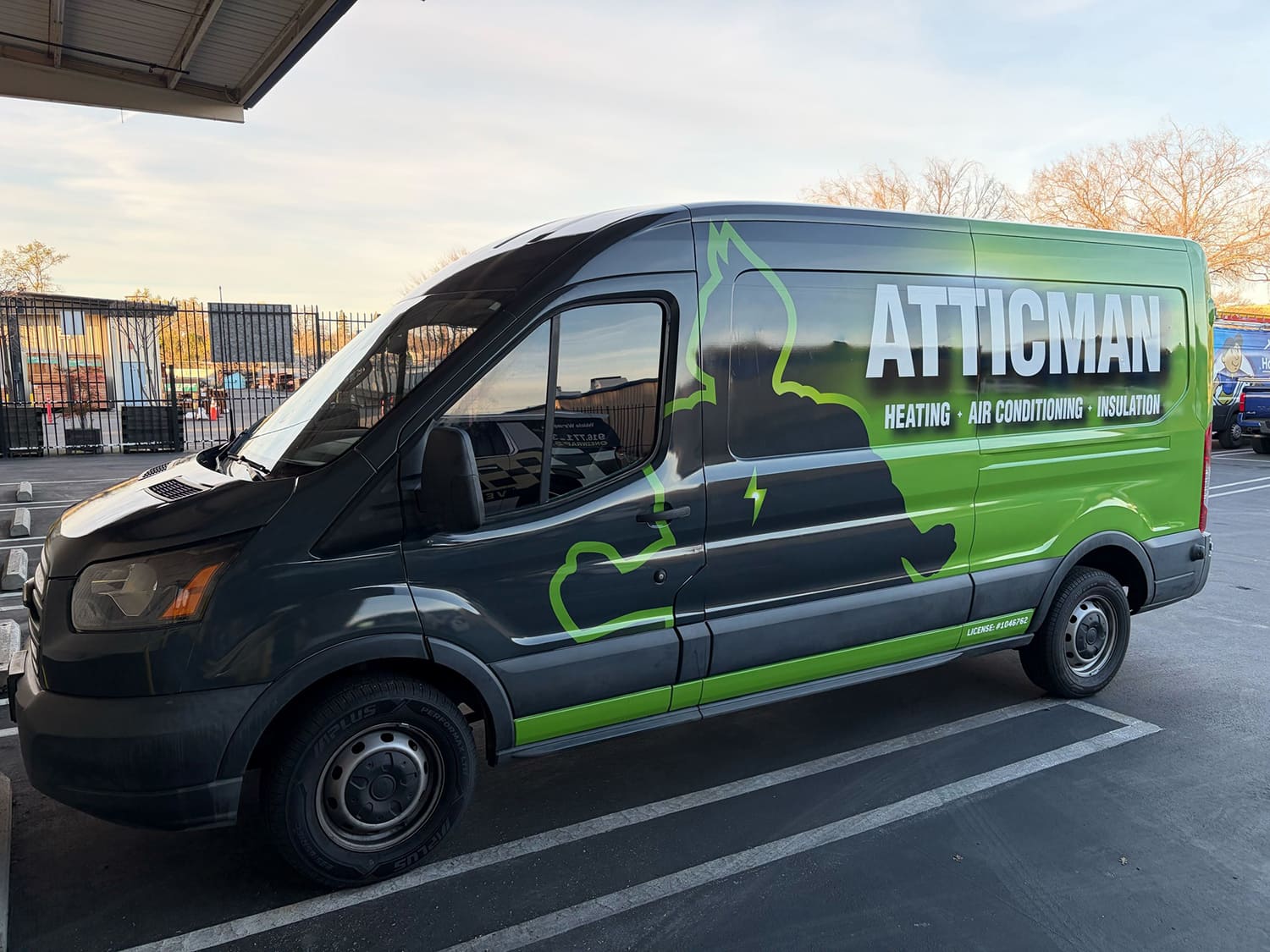
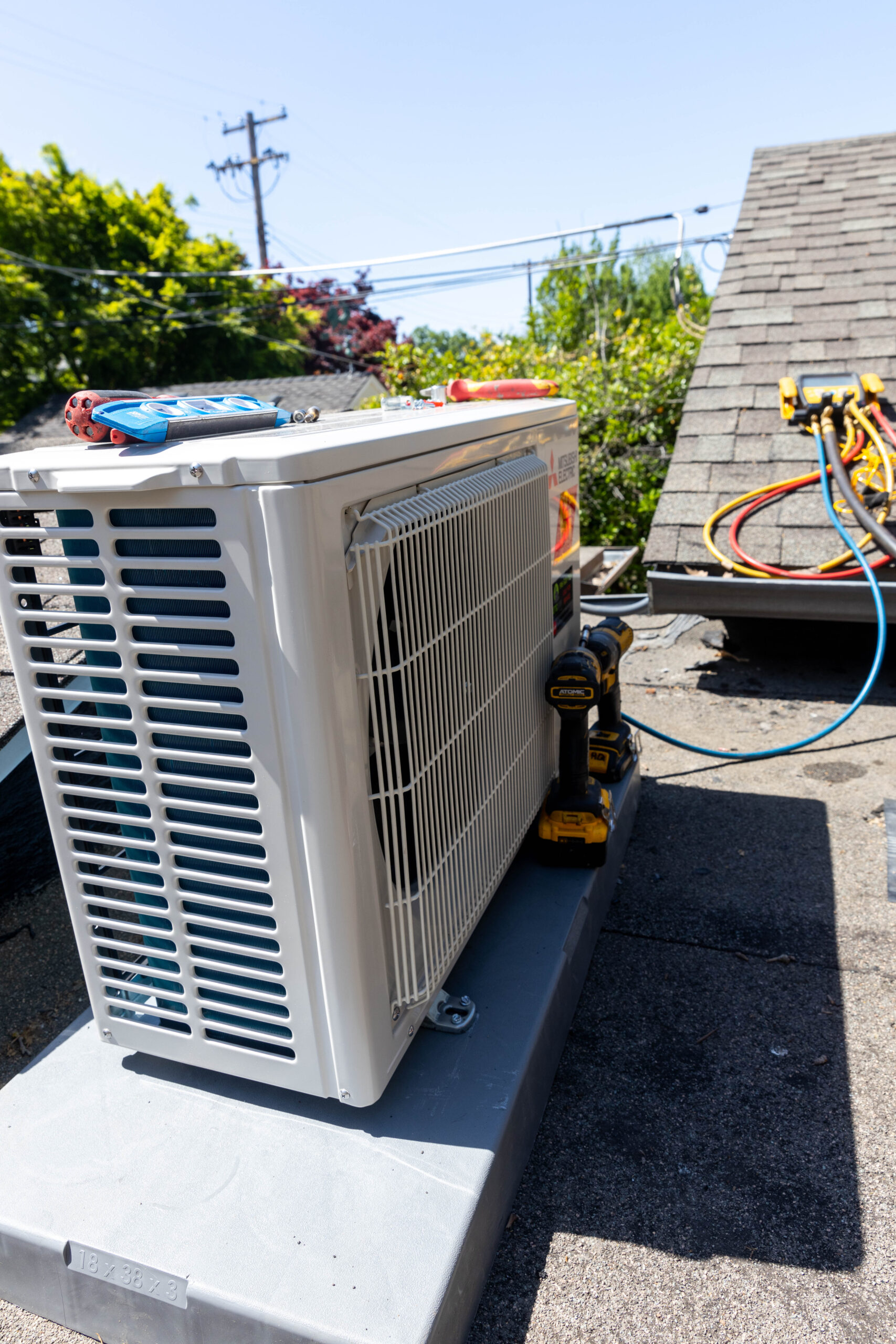
It’s the call we get more than any other once summer hits the Sacramento Valley: “My AC is running, but the house just won’t cool down.” If you’re standing in front of your thermostat right now, watching it read 80 while the screen says it’s set to 74, you want one honest answer: is my AC broken, or is this just what 105 degrees does to a house?
Here’s the short version, since that’s what most people came for. More often than not, the system isn’t broken. A healthy central AC is built to cool your indoor air to roughly 20 degrees below the outside temperature, and local systems are sized for a summer design day in the low 100s, not for the hottest hour of the worst heat wave. When the weather blows past that limit, even a perfect system drifts a few degrees above your setpoint. That’s physics, not failure. But sometimes it really is a fault, and the difference matters. If you’ve kept up with routine AC maintenance this season and it’s still struggling, that’s a useful clue we’ll come back to.
We’re Atticman Heating and Air Conditioning, Insulation, and across our service area we run these “not cooling” calls all summer long. This post is what those visits actually show, so you can tell normal heat-wave behavior apart from a system that needs a look.
Is My AC Broken, or Is It Just Too Hot Outside?
Direct answer: If your house is sitting within about 20 degrees of the outdoor temperature, your AC is most likely working fine. If it’s failing on mild days too, or getting worse every season, that points to a real fault.
Here’s why the 20-degree number matters. A working central air conditioner is generally expected to pull the indoor temperature down to about 20 degrees below outside, on a hot day. That’s a long-standing rule of thumb in our trade. So when it’s 100 outside, a house holding 78 to 80 isn’t underperforming. It’s doing exactly what it was designed to do.
The other half of the answer is design temperature. Contractors size equipment using long-term ASHRAE climate data, picking a summer design temperature that the area only exceeds a small slice of the year. For the Sacramento region, that figure lands in the low 100s. Your system was sized for that, not for a 108-degree spike. When a heat wave runs hotter than designed, the gap between what your AC can move and what the heat is adding shrinks, and the indoor temperature creeps up. That’s the moment most people assume the worst.
How Cold Can My AC Actually Get When It’s 105 Outside?
Roughly 20 degrees below the outdoor temperature is the realistic ceiling for most homes. At 105 outside, an indoor reading in the low-to-mid 80s can still mean your equipment is healthy and running hard.
This surprises a lot of folks. They set the thermostat to 72 and expect 72, no matter what the sky is doing. But your AC doesn’t “make cold.” It moves heat out of your house faster than heat leaks in. On a brutal day, heat pours in through walls, attics, ducts, and especially west-facing glass. The system can still be winning the fight and just not winning by much.
So when someone tells us the house is holding 80 while it’s 102 outside, that’s not a breakdown. In a 100-plus wave, a properly sized system commonly runs a few degrees above your setpoint, and 78 to 82 indoors at 100-plus outside is genuinely strong performance.
What Temperature Should My House Be During a Sacramento Heat Wave?
A realistic target during an extreme stretch is a few degrees above whatever you set, not a perfect match to the number on the dial. A system that holds your setpoint flawlessly at 95 outside, then drifts 2 to 6 degrees high at 105-plus, is behaving normally.
That “creep” pattern is one of the clearest signals we see. Homes that cruise comfortably through a mild 90-degree afternoon, then slowly lose ground as the week pushes past 100, are usually fine. The equipment hasn’t changed. The load on it has.
If you want a steadier house during peak heat, small habits help more than people expect: close blinds on the sunny side before noon, avoid running the oven mid-afternoon, and don’t drop the thermostat way down hoping it cools faster. It won’t. The system runs at one speed and a lower setting just makes it run longer.
Why is My AC Running Constantly But Not Cooling?
On a record-heat afternoon, near-constant running is normal and even a good sign. Your system is supposed to run long cycles when the load is high. Short, frequent cycles in extreme heat would actually worry us more.
So when does constant running mean trouble? Watch for this combination:
- It runs all day but the house keeps climbing, not holding steady
- It also can’t keep up on mild 85 to 90 degree days
- Air from the vents feels weak, or barely cool
- It’s clearly worse than the same week last summer
If you’re nodding at two or more of those, that’s our cue to come look. A system that struggles only at the very top of a heat wave is fighting the weather. A system that struggles on an ordinary day is fighting itself.
Not sure which one you’ve got? Atticman offers no-charge diagnostics, so you can find out exactly what’s happening before you commit to anything. We’d rather tell you the system is healthy than sell you a repair you don’t need.
When Is It a Real Problem? The Faults We Actually Find on a Diagnostic
Once we rule out physics, here’s what’s usually behind a genuine “can’t keep up.” These are checks for a technician, not DIY projects, because several involve refrigerant, electrical components, or sealed parts of the system.
- Restricted airflow from a dirty filter. The U.S. Department of Energy notes that replacing a clogged filter with a clean one can lower an AC’s energy use by 5 to 15 percent. A choked filter starves the whole system of air.
- Leaky ductwork. ENERGY STAR estimates that in a typical home, about 20 to 30 percent of the air moving through the ducts is lost to leaks and poor connections. In older Sacramento and Carmichael homes with aging duct runs, that loss can be the whole problem.
- A dirty outdoor condenser coil. Caked in dust and cottonwood, it can’t dump heat, so cooling capacity drops right when you need it most.
- Gradual refrigerant loss. A slow leak shows up as cooling that gets a little weaker each season. This is a diagnosis for a licensed tech, not a top-off you should chase yourself.
- A frozen evaporator coil. Ice on the indoor coil chokes airflow and cooling, often tied to low refrigerant or blocked air.
- Thermostat placement or sizing issues. A thermostat in a hot hallway reads wrong, and a system that was undersized at install never had a chance.
That last one is more common than you’d think. Industry research has long shown that fewer than half of installations are sized with a full load calculation (the ACCA Manual J process). A home that has “never quite kept up” since day one may have been handed an undersized system from the start.
Here’s a simple side-by-side to place your own situation:
| What you’re seeing | Probably just physics (normal) | Probably a real fault (book a diagnostic) |
| Indoor vs. outdoor gap | Within ~20°F of outside | More than 20°F short of outside |
| Performance on mild days | Holds setpoint fine at 85 to 90°F | Struggles even at 85 to 90°F |
| Trend over the season | Same as last summer | Clearly worse year over year |
| Airflow at the vents | Strong, noticeably cool | Weak or barely cool |
| When it slips | Only during 100°F+ peaks | All the time, any temperature |
If the right-hand column sounds like your house, that’s the point where guessing gets expensive. Booking air conditioner repair in Sacramento with a tech who measures airflow, temperature split, and refrigerant charge gets you a real answer instead of another hot afternoon wondering.
The Atticman Heat-Limit Check
When neighbors ask us how to tell the difference themselves, we walk them through three quick questions. We call it the Atticman Heat-Limit Check:
- Is the house within about 20 degrees of the outdoor temperature right now? If yes, that’s normal physics during a heat wave. Your system is keeping pace.
- Does it also fall behind on mild 85 to 90 degree days? If yes, that’s a sign of a real fault. Time for a diagnostic.
- Has it gotten gradually worse season over season? If yes, that pattern usually points to refrigerant, a dirty coil, or a sizing problem worth inspecting.
Two “normal” answers and a comfortable-ish house? You’re probably fine. Any “yes” on questions 2 or 3? That’s worth a professional look.
Does the 2025 Refrigerant Change (R-410A) Affect My Repair?
Short answer: no, you don’t need to panic, and you’re not being forced to replace anything.
Under the EPA’s AIM Act, manufacturers stopped building new residential systems charged with R-410A refrigerant as of January 1, 2025. New equipment now uses lower-impact A2L refrigerants, mainly R-454B or R-32. But your existing R-410A system is still completely legal, and technicians can keep servicing and recharging it for years to come.
A few honest points worth knowing:
- You cannot “swap” your old system to the new refrigerant. R-454B and R-32 aren’t drop-in replacements, so the change only matters when you eventually buy new equipment.
- As supply tightens, R-410A service costs may rise over time, which is something to weigh if your system is older and leaking.
- A2L refrigerants are mildly flammable, so they require techs with proper certification and equipment. That’s a reason to use a licensed pro, not a reason to fear the refrigerant.
If a system that’s been faithful for 15 years is still cooling well, the refrigerant news alone isn’t a reason to replace it.
Do I Need a Permit to Replace My AC in California?
Yes. Replacing an AC in California almost always requires a permit, and that’s a good thing for you as the buyer. It’s how you know the install was done to code.
California’s 2025 Title 24 energy code sets the bar, and a legitimate replacement triggers third-party HERS verification of the install. Under the current code, a proper single-family job is checked for things like:
- Refrigerant charge, verified by a HERS rater (now required in all climate zones)
- Duct leakage held under 5 percent of system airflow
- R-6 insulation on ducts in conditioned space
- A minimum efficiency of SEER2 14.3 for new equipment in our region
If a quote skips the permit or “doesn’t bother” with HERS testing, that’s a red flag, not a shortcut. A permitted, verified install is what protects the comfort, efficiency, and resale value you’re paying for. This is the kind of work Atticman handles to code, with the paperwork that holds up at inspection.
AC Can’t Keep Up: Should I Repair or Replace It?
There’s no honest one-size answer here, so we treat it as a real assessment rather than a sales pitch. Generally, a newer system with a single fixable fault leans toward repair, while an older system with repeat repairs, weak cooling every year, and a slow refrigerant leak starts to lean toward new replacement. Age, repair history, efficiency, and how the home is ducted all factor in.
One timing note for 2026: the federal 25C tax credit expired on December 31, 2025 under the One Big Beautiful Bill Act, so new installs this year no longer qualify for it. That doesn’t mean savings are gone. State, SMUD, and PG&E rebate programs change often, so the right move is to ask a licensed pro or your utility for the current figures before you decide. We avoid quoting prices or rebate amounts here precisely because they shift, and we’d rather you get numbers that are accurate today.
Get a Clear Answer Before the Next Heat Wave Hits
You shouldn’t have to guess whether your AC is healthy or failing while you’re sweating through a 105-degree week. The fastest way to know is to have someone measure it. Atticman Heating and Air Conditioning, Insulation offers no-charge diagnostics across the Sacramento Valley, so you get a straight answer first, with no pressure to commit to repairs. If you’re in Roseville, Folsom, Elk Grove, Citrus Heights, Rocklin, or anywhere nearby and your system isn’t keeping up, reach out and we’ll take a look before the next wave rolls in.
Frequently Asked Questions
Why won’t my AC cool below 75 when it’s really hot out? Because your AC cools relative to the outdoor temperature, not to a fixed number. On a 100-plus day, holding the upper 70s can be the system’s honest limit. If it also can’t reach 75 on a mild 85-degree day, that’s when a fault is more likely and a diagnostic makes sense.
What does “AC not keeping up with the thermostat” actually mean? It usually means the cooling load is beating the system’s capacity, either because the weather is past design temperature or because something is restricting the system. Setting the thermostat lower won’t speed it up. The unit runs at one speed and just runs longer.
How many degrees can an AC cool a house? As a working rule, about 20 degrees below the outdoor temperature for most homes. Some well-sealed, well-insulated homes do a little better, but 20 is the realistic benchmark we use when we check whether a system is performing.
Why does my upstairs stay hot when downstairs is comfortable? Heat rises, and upper floors take more sun on the roof and walls. Duct design and balancing matter a lot here. If the gap is large and constant, it’s worth having airflow and ductwork checked rather than just cranking the thermostat.
Is it bad for my AC to run nonstop during a heat wave? Not by itself. Long run times are normal and expected when it’s extremely hot. The warning sign is running nonstop while the house still climbs, or running hard on days that aren’t even that warm.
Do you serve my area? We cover much of the Sacramento Valley, including Roseville, Folsom, Elk Grove, Carmichael, Citrus Heights, Rocklin, Granite Bay, El Dorado Hills, Rancho Cordova, Lincoln, Auburn, and the surrounding communities. If you’re not sure, just ask.
Recent Posts
AC Unit Freezing Up in Summer? Questions People Ask

Sacramento HVAC Leader Mario Lopez Named to 40 Trades Under 40 Class of 2026
AC Taking Too Long to Cool? Here’s What’s Actually Wrong
Questions or Concerns?
Fill out this form and our team will get back to you as soon as possible.
THE TRUSTED TEAM THAT PUTS YOUR HOME FIRST
Get expert service for your home today!


Homegrown service you can trust, built by a local.
Proudly serving the neighborhood we grew up in.