 Skip to main content


Proudly Serving Sacramento & Nearby Areas



Trusted by 3021+ Customers
AC Taking Too Long to Cool? Here’s What’s Actually Wrong
Sacramento’s Trusted Home Comfort Experts


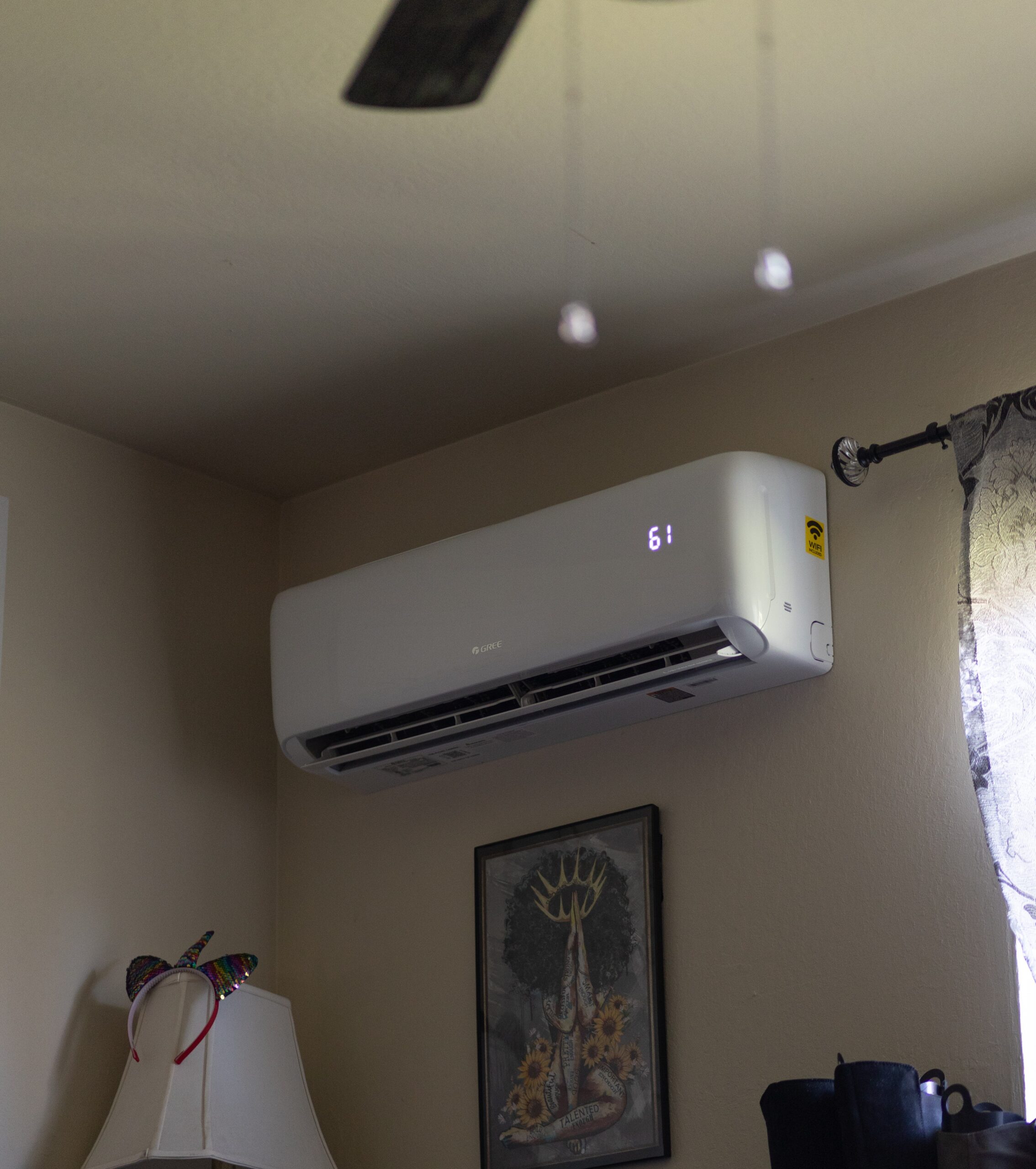
If your AC has been running for hours and the house still feels warm, you’re not imagining it, and you’re not alone. A properly working central AC should drop your indoor temperature by about 1°F per hour under normal conditions, according to multiple HVAC sources. So if you’re trying to go from 80°F to 72°F, you should feel real progress within about three hours, not three workdays.
When cooling takes much longer than that, something is off. Sometimes it’s a small fix. Sometimes it’s a sign your system is fighting a problem it can’t win on its own. As a local team at Atticman Heating and Air Conditioning, Insulation, we see the same handful of causes show up over and over in Sacramento homes, and we want to walk you through what’s actually happening before you call anyone out.
This guide is the version we wish more homeowners had read before getting a quote. We’ll cover real benchmarks, the seven most common reasons your AC is slow, the 2026 refrigerant change that’s quietly affecting repair costs, and what California’s 2026 Title 24 code means if you end up needing a replacement.
How Long Should Your AC Actually Take to Cool a House in Sacramento?
Here’s the short answer.
- Normal day, normal system: about 1°F per hour of indoor temperature drop.
- Moderate four-bedroom home: about 10°F drop in roughly 3 hours under standard conditions (General Air, PickHVAC).
- On 95°F+ days: the same system can take up to twice as long to drop a single degree, because it’s working against a much bigger temperature gap (Bellows Plumbing, Heating, Cooling & Electrical).
This is where Sacramento gets interesting. Our summer highs sit between 85°F and 91°F on average, with multiple triple-digit days mixed in (Weather Spark). The Old Farmer’s Almanac long-range forecast for late 2025 into 2026 projects a hotter and drier than normal summer for our region, with peak heat in early and late June and again in mid to late August (Almanac.com).
Add in Sacramento’s urban heat island effect, and your AC has more work to do than a system in a milder climate. A slow cool down on a 104°F afternoon may be normal. A slow cool down on a mild 88°F day is a clue something needs attention.
Why Is My AC Taking So Long to Cool? The 7 Real Causes
Most slow-cooling complaints come back to one of seven things. We’ve listed them in roughly the order we find them in real homes.
| Cause | Most common symptom | Typical fix |
| Weak capacitor | Outdoor unit hums then starts late | Replace capacitor |
| Low refrigerant or leak | Ice on lines, hissing sound | Leak repair, recharge |
| Dirty coils | Higher bills, weaker cool air | Coil cleaning |
| Clogged filter or duct leaks | Weak airflow at vents | Filter swap, duct sealing |
| Failing blower motor | Grinding, weak airflow | Motor repair or replacement |
| Wrong system size | Short cycles or never finishes | Load calc, equipment swap |
| Aging equipment (10+ yrs) | Several issues at once | Repair vs. replace decision |
Let’s get into each one.
Cause 1: A Weakening Capacitor (The Most Common Hidden Culprit)
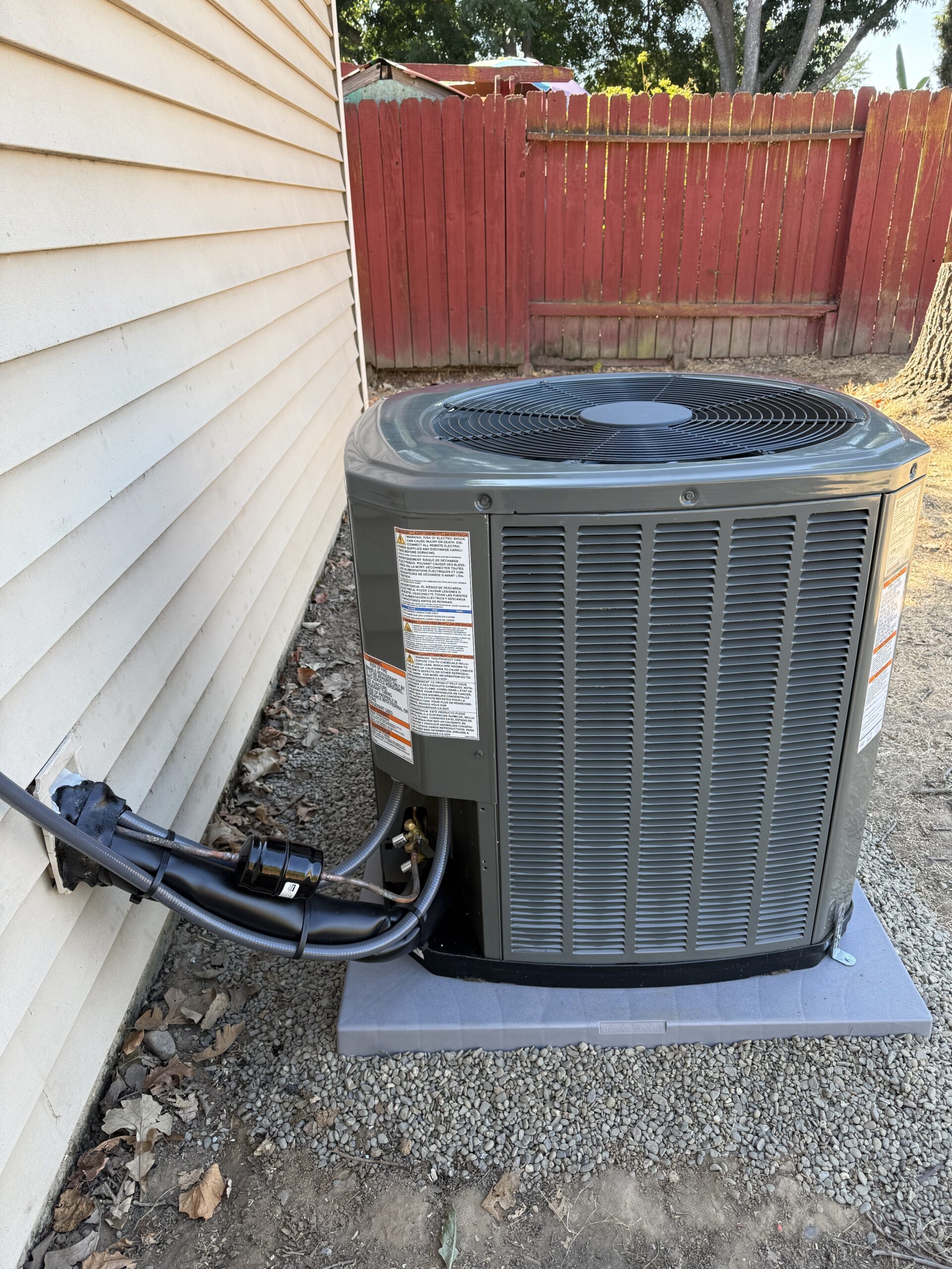
A capacitor is a small cylinder inside your outdoor unit that gives your compressor and fan motor the energy burst they need to start, and the steady push they need to keep running. Capacitors rarely fail all at once. They weaken slowly across a season or two, and that slow decline is exactly what produces the “running but barely cooling” feeling.
When a capacitor is on its way out, three things happen at the same time:
- The compressor still runs but with less power, so it can’t fully compress the refrigerant. Your supply air feels lukewarm instead of cold.
- Energy use climbs because the motor pulls more amps to start and run.
- Wear stacks up, and a worn capacitor can turn into a much more expensive compressor failure.
Signs a capacitor is failing, usually in this order (Oliver Heating & Cooling, FL Air, MR. HVAC):
- A short delay before the outdoor unit kicks on.
- A faint humming or buzzing before the compressor starts.
- The outdoor fan spins, but the air from your vents stays warm.
- Short cycling, where the system shuts off before reaching the set temperature.
- A breaker that trips on hot afternoons but holds at night.
- Higher electric bills with no change in how you use the system.
According to Bryant’s official AC capacitor guide, failed or failing capacitors account for the majority of AC service calls they see, and a weakening capacitor pulls extra power that drives up monthly bills.
Safety note from Bryant: Capacitors store enough electrical energy to be lethal even when the system power is off. This is one repair that genuinely is not a DIY job, and we mention it because we want you safe, not because we’re trying to sell anything.
Sacramento attics can hit 130°F+ in summer, and outdoor condenser units sit in 100°F heat for months. Heat is the number one thing that ages a capacitor, which is why we see so many of them give up here.
Cause 2: Low Refrigerant or a Slow Leak
A healthy AC keeps the same amount of refrigerant for its entire life. Refrigerant doesn’t get used up. If yours is low, you have a leak somewhere (Lennox, Aristair, PV Heating).
When refrigerant drops, the evaporator coil can’t pull as much heat out of your indoor air. Pressure inside the coil falls below freezing, moisture condenses and freezes on the coil, and now you have ice blocking airflow on top of the original problem.
Common signs:
- Longer and longer cooling cycles.
- Ice or frost on the indoor coil or copper line outside.
- Hissing or bubbling near the lines.
- Higher humidity indoors, even with the AC running.
- Climbing electric bills.
One more thing worth knowing: only EPA Section 608 certified technicians can legally add refrigerant. Homeowners cannot buy and add it themselves. This isn’t a brand rule, it’s federal.
We’ll explain how the 2026 refrigerant transition affects this further down, because it changes the math on repair vs. replace.
Cause 3: Dirty Evaporator or Condenser Coils
Coils are the heat-exchange surfaces inside your indoor unit and outside condenser. When dust, pet hair, pollen, or pollution builds a layer on them, heat can’t transfer the way it’s designed to.
The data here is genuinely surprising.
- The U.S. Department of Energy has found that dirty condenser coils can raise energy use by up to 30% (cited by AC Plus Heating & Cooling, CoilRenew).
- The U.S. EPA has noted that just 0.042 inches of dirt on a coil can cut efficiency by 21% (cited by Permatron).
- Industry trade publication ACHR News reports that heavy coil fouling can push energy use 37% higher, and a 10-ton system can output as little as 7 tons of actual cooling.
- A 15 SEER2 system with dirt buildup can perform like a 12 SEER2, which is a 20% drop in real-world efficiency (The Furnace Outlet).
Worth noting for balance: Lawrence Berkeley National Lab research suggests average coil fouling losses are often under 5%, but the losses get much bigger on marginal systems or on extreme days. Sacramento summers create exactly the conditions where coil dirt hurts the most.
If your AC sat through a heavy pollen spring or a smoky wildfire season, your coils are probably part of your slow-cooling problem.
Cause 4: Your System Is Undersized, Oversized, or Aging Out
Sizing is the quietest cause of slow cooling because it’s often baked in from day one. A correctly sized AC follows ACCA Manual J for load calculation and Manual S for equipment selection, which California Title 24 requires (Conduit, ACCA, Procalcs).
A system can become undersized over time if you:
- Added a room, finished a garage, or converted an attic.
- Replaced shade trees with new construction.
- Added big west-facing windows.
- Increased the number of people regularly home during the day.
Oversized AC is also a real problem. It cycles on for 2 to 5 minutes, hits the thermostat setpoint, and shuts off before it ever removes humidity. Result: the house reads 74°F but feels muggy because indoor humidity stays above 60% (Procalcs). Oversized systems waste 15 to 30% more energy through constant start-stop wear (Solartech Online, Jupitair HVAC).
Then there’s age. Central AC systems last 10 to 15 years on average, with some pushing 15 to 20 with strong maintenance (Carrier). Older systems lose about 5 to 10% of their original efficiency as they age (Improved Comfort HVAC). The EPA and DOE generally suggest considering replacement for any central AC over 10 years old, especially when facing an expensive repair.
If your system is around the decade mark and slow, you’re not crazy for thinking about replacement.
Cause 5: A Failing Blower Motor
The blower motor is what physically pushes cooled air through your ducts and into your rooms. When it weakens or fails, even a perfectly healthy outdoor unit can’t deliver cooling where you need it.
What to listen and feel for:
- Weak airflow at vents even when the fan is set to high.
- Grinding, squealing, or rattling from the indoor unit.
- The motor running hot or shutting itself off.
- Uneven temperatures between rooms.
High static pressure from undersized or kinked ductwork forces blower motors to work 50% or more harder than they should (Diversified Energy, citing NIST research). Motors built to last 15 to 20 years can burn out in 2 to 5 under that strain.
For homes upgrading to ECM (electronically commutated) blower motors, the Consortium for Energy Efficiency reports up to 75% energy savings compared to older PSC motors. That’s a meaningful upgrade for any home where the existing motor is on its way out.
Cause 6: Blocked or Leaking Ductwork, Filters, and Vents
This one is huge. If we had to point at the single biggest source of waste in residential AC, it’s the ducts. And it’s also the most fixable.
The numbers:
- ENERGY STAR (joint EPA / DOE program): In a typical home, 20 to 30% of the air moving through the duct system is lost to leaks, holes, and bad connections.
- U.S. Department of Energy: Roughly 90% of residential ductwork has hidden air leaks (Aeroseal, citing DOE).
- ENERGY STAR estimate: Leaky ducts can cut HVAC efficiency by about 20% and waste $300 to $700 per year in energy depending on system and rates.
- A 3-ton system with 25% duct leakage is losing the equivalent of about three-quarters of a ton of cooling capacity (E.P. Homiek, Diversified Energy).
- A clogged filter alone makes the system use about 15% more energy, and a fresh filter can boost efficiency by 5 to 15% (DOE, cited by Entergy and Carrier).
- DOE’s Residential Energy Consumption Survey shows homes built before 1990 commonly leak more than 20 to 30% of duct airflow.
That last point matters here. Sacramento has substantial pre-1990 housing stock across Carmichael, Citrus Heights, North Highlands, Rio Linda, parts of Rancho Cordova, and older Sacramento neighborhoods. If your home is from that era and the ducts have never been tested or sealed, this is statistically your most likely culprit.
When the Cooling Problem Is Actually a Drain Problem
Here’s a quieter cause to know about. As your AC pulls humidity from the air, water drips into a pan and runs out through a PVC drain line. Over time, algae, mold, and dust can clog that line. Three things can then happen:
- The float switch trips and shuts the whole system off to prevent water damage. You experience this as “the AC keeps turning off and the house never gets cool.” California’s Mechanical Code requires float switches on most modern installs, so this failure mode is common locally.
- The evaporator can ice over when drainage backs up alongside any airflow issue, dropping cooling output sharply.
- Humidity stays high indoors, so even when the thermostat reads 74°F, the home feels warmer.
Worth noting for honesty: Trane’s official troubleshooting position is that a clogged drain line, on its own, mostly causes water leaks and damage rather than direct cooling loss. The slow-cooling effect usually shows up in compound failures or through the float-switch shutdown cycle. We’re including this because the truth is more useful than a one-line answer.
What the 2026 Refrigerant Change Means If Your AC Needs Repair
This is the conversation most homeowners haven’t had yet, and it’s quietly changing the cost of fixing an AC.
The facts:
- As of January 1, 2025, new residential AC and heat pump systems built in the U.S. must use refrigerants with a Global Warming Potential (GWP) of 700 or lower under the EPA’s Technology Transitions Rule and the AIM Act.
- R-410A, used in most systems installed between roughly 2010 and 2024, has a GWP of 2,088.
- Its replacements are R-454B (GWP about 466) and R-32 (GWP about 675) (EPA, AHRI, Kele.com).
- Existing R-410A systems are not illegal and can still be serviced. There’s no EPA end-of-service date for them right now.
- R-454B supply has been disrupted. Cylinder prices rose from around $345 in 2021 to over $2,000 in 2025, with national project delays (ACiQ Dealer Program, EPA Fact Sheet, September 2025).
- An EPA proposed rule (comment period closed November 17, 2025) would let installers use up R-410A inventory manufactured before January 1, 2025, easing the supply crunch (Beveridge & Diamond, EPA).
- Both R-454B and R-32 are A2L-classified, meaning mildly flammable. They require A2L-certified tools and trained handling (Kele.com, ICC Building Safety Journal Q4 2025).
- R-410A systems cannot be retrofitted to R-454B or R-32. When an old system fails, replacement equipment will be specified for the new refrigerant (iFactory, AC Direct, Ecoer).
What this means for you: If your slow-cooling problem is a refrigerant leak on a 10+ year old R-410A system, repair costs are higher than they were two years ago, and that changes the repair vs. replace math. We’d rather walk you through it honestly than push one direction.
This is a great moment to schedule a professional AC inspection and tune-up before the next heat wave. If you want the team that’s been tracking these refrigerant changes closely, that’s where we come in. Schedule a no-charge diagnostic with our Sacramento HVAC team and we’ll give you the real picture before you commit to anything.
How California Title 24 Affects AC Replacement in the Sacramento Area
The 2025 Building Energy Efficiency Standards took effect January 1, 2026 for all California permits submitted on or after that date (California Energy Commission, Title24Calcs). If you replace your AC this year, these new rules apply to you.
The big changes that affect Sacramento homeowners:
- All ducts in conditioned space now require R-6 insulation, tightening from earlier code.
- Airflow and fan efficiency testing is mandatory on new HVAC systems.
- Heat pump refrigerant charge must be verified by a third-party HERS rater in every climate zone.
- Duct leakage limits: if no ducts are replaced, leakage must be 15% or less. If ducts are replaced, leakage cannot exceed 6%, verified by HERS (NEXGEN HVAC & Plumbing).
- Replacing a furnace, AC, or heat pump can trigger Title 24 alteration requirements, including load calculations and a Title 24 alteration report.
Two financial notes worth knowing:
- The TECH Clean California program offers heat pump install incentives.
- The federal 25C tax credit can return up to $2,000 on qualifying high-efficiency equipment.
Sacramento sits primarily in California Climate Zone 12, with parts of the metro in Zones 11 and 13. Title 24 treats each of California’s 16 zones with different prescriptive requirements, so cookie-cutter quotes from out-of-area contractors often miss the mark.
For transparency: California did not adopt a heat pump mandate for existing-home AC replacements. If your central AC breaks, you are not forced to install a heat pump, even though the rebates make it attractive (North Penn Now).
When Slow Cooling Is a “Design Day” Issue vs. a Real Problem
Here’s a piece of context almost nobody explains. ACs are sized by ACCA Manual J for what’s called the 1% or 2.5% design day, meaning the worst weather that statistically shows up only 3 to 9 days per year. On those 105°F+ days, even a perfectly healthy system will run longer to keep up. That’s how it was designed, not a malfunction.
The diagnostic line is this:
- Slow on 100°F+ days only? Probably normal physics.
- Slow on mild 85 to 90°F days? Something is wrong.
- Slow on every day above 80°F? Multiple problems are stacking, which leads us to the next point.
The Compounding Effect: Why Small Problems Add Up Fast
This is the math no one runs for homeowners. Say your system has all of these going on at once:
- 10 years old with no major maintenance, so down maybe 5 to 10% from original efficiency.
- 25% duct leakage (very common in pre-1990 Sacramento homes).
- Dirty condenser coil, up to 30% extra energy use.
- Clogged filter, 15% extra energy use.
Stack those and a system rated for, say, 3 tons of cooling might be delivering closer to 40 to 50% of its real capacity on a hot afternoon. That’s not one problem. That’s four problems that each look small alone.
This is why a single repair sometimes doesn’t fix slow cooling, and why a full system inspection with airflow, duct, and coil checks is more useful than chasing one symptom at a time. Our Sacramento HVAC maintenance team sees this pattern almost weekly, especially in homes that have skipped tune-ups for two or three years.
Frequently Asked Questions
How long should it take to cool a house from 80°F to 72°F?
About 8 hours under normal conditions at the conservative benchmark of 1°F per hour. A properly sized, well-maintained system can do it faster, sometimes 3 to 4 hours, especially in a moderate four-bedroom home. On 95°F+ days, expect longer.
Why is my AC running but not cooling the house?
The most common reasons are a weakening capacitor, a refrigerant leak, dirty coils, a clogged filter, or duct leakage. Less often, it’s a failing blower motor or a tripped float switch from a clogged drain line.
Is it normal for my AC to run all day in Sacramento summer?
On 100°F+ design days, yes, even healthy systems often run continuously. On mild 85 to 90°F days, no. That’s a sign to schedule an inspection.
How do I know if my AC is low on refrigerant?
Look for ice on the indoor coil or copper line, hissing sounds near the unit, rising humidity indoors, and longer run times. Refrigerant doesn’t deplete on its own, so low refrigerant always means a leak.
Will I have to replace my R-410A AC in 2026?
No. Existing R-410A systems are not illegal and can still be serviced. The change applies to new system manufacturing, not equipment already in your home. But repair costs on R-410A systems are higher than they used to be because of supply issues, which can affect the repair-vs-replace decision.
Does a dirty filter really make my AC slower?
Yes. The U.S. Department of Energy estimates a clogged filter raises energy use by about 15%, and a fresh filter can boost efficiency by 5 to 15%. It’s the cheapest and fastest fix on this list.
Should I replace or repair my 10-year-old AC?
It depends on the repair cost, how often it’s failed, and current efficiency. The EPA and DOE generally suggest considering replacement once a central AC is over 10 years old, especially if facing an expensive repair. A no-charge diagnostic can give you the numbers to decide.
Why is one room hotter than the others?
Usually duct leakage to that room, a closed or blocked vent, undersized return, or insulation gaps. Sometimes a failing zone damper. Single-room temperature issues almost always trace back to airflow.
Ready to Find Out Exactly Why Your AC Is Slow?
You don’t have to guess. Atticman Heating and Air Conditioning, Insulation offers no-charge diagnostics so you can see exactly what’s going on with your system before deciding on any repair. We serve Sacramento, Elk Grove, Roseville, Folsom, Rocklin, Citrus Heights, Carmichael, Rancho Cordova, El Dorado Hills, and the surrounding communities, and our team stays current on the 2026 refrigerant transition, California Title 24, and the rebate programs that may apply to your situation.
If your AC has been struggling lately, the smart move is to get a clear answer before the next heat stretch arrives. Give us a call or book online, and our HVAC contractors in Roseville, CA walk through your system, explain what we find in plain language, and let you decide what’s worth doing.
Recent Posts
AC Unit Freezing Up in Summer? Questions People Ask
AC Not Keeping Up With Heat? What Our Service Calls Show

Sacramento HVAC Leader Mario Lopez Named to 40 Trades Under 40 Class of 2026
Questions or Concerns?
Fill out this form and our team will get back to you as soon as possible.
THE TRUSTED TEAM THAT PUTS YOUR HOME FIRST
Get expert service for your home today!


Homegrown service you can trust, built by a local.
Proudly serving the neighborhood we grew up in.