 Skip to main content


Proudly Serving Sacramento & Nearby Areas



Trusted by 3025+ Customers
Why Is My Air Conditioner So Loud? 6 Causes to Know
Sacramento’s Trusted Home Comfort Experts


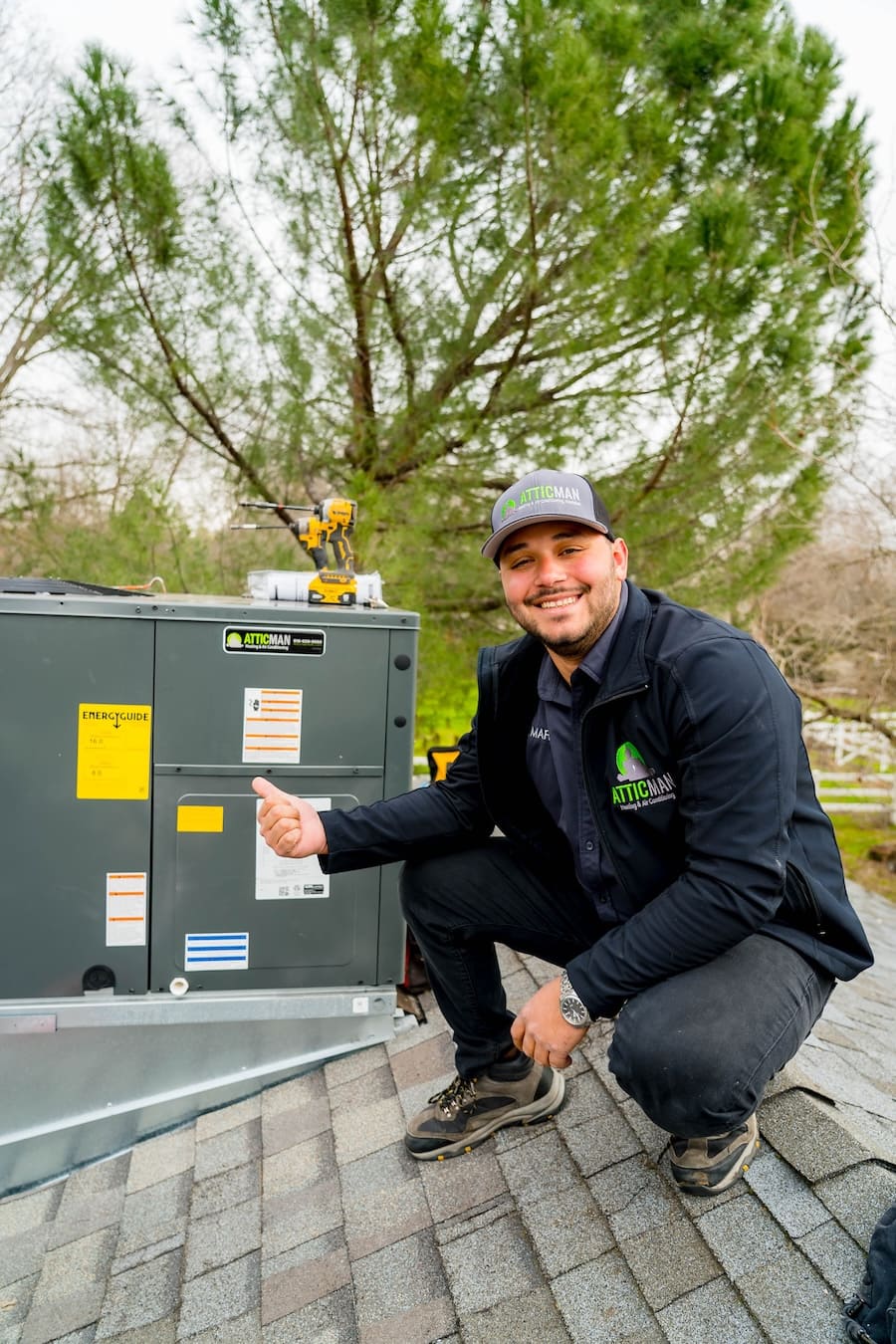
That new noise coming from your AC isn’t background music. It’s your system trying to tell you something, and the message usually isn’t good.
Here at Atticman Heating and Air Conditioning, Insulation, we get calls every week from homeowners across Sacramento and the surrounding areas who woke up to a banging, hissing, or screeching sound they’ve never heard before. The frustrating part? By the time a noise gets loud enough to bother you indoors, the problem has often been building for weeks.
This guide breaks down the six most common sounds your AC makes before it breaks down, what each one likely means, and when you need to shut the unit off before things get worse. If you’d rather skip the guesswork and get a set of eyes on your unit, our team offers professional AC maintenance in Sacramento with no-charge diagnostics, so you know what’s going on before anything gets repaired.
What a Loud AC Usually Means (The Short Answer)
A loud air conditioner almost always signals a mechanical, electrical, or refrigerant problem. The specific sound points to the specific issue. Banging often means compressor damage. Hissing usually means a refrigerant leak. Clicking points to electrical faults. In most cases, the safest move is to shut the system off and call a certified technician rather than keep running it.
Running a noisy AC usually makes the damage worse. A failing capacitor left alone can fry the compressor. A small refrigerant leak can turn into a system-wide loss. The repair that costs a few hundred dollars today can easily cost a few thousand next month.
Why Your AC Noise Shouldn’t Be Ignored
Before we get into the six sounds, here’s some context that might surprise you.
U.S. homeowners spend an estimated $10 to $14 billion every year on HVAC repair and maintenance. About 3 million heating and cooling systems are replaced annually across the country. And here’s the kicker: only around 30% of homeowners schedule preventative maintenance. The rest wait until something goes wrong, often until the unit gets loud.
A well-maintained residential AC typically lasts 15 to 20 years. A neglected one fails earlier, louder, and more expensively.
As the team at AireServ put it in a February 2026 post: “It doesn’t take much for a small noise to turn into a major problem that costs you both time and money. The sooner you can get to the root of the problem, the better.”
That’s the framework we use at Atticman too. Catch the sound early, save the system.
The 6 Sounds Your AC Makes and What They Really Mean
1. Banging or Clanking
If your AC sounds like someone dropped a wrench inside it, that’s serious.
This noise usually means something has come loose inside the unit, a blower or fan blade is unbalanced, or worse, there’s compressor damage. A broken piston pin or connecting rod inside the compressor creates this exact sound.
What to do: Turn the unit off immediately. Banging isn’t a noise you run through. The longer the compressor struggles, the closer you get to a full replacement, which is one of the most expensive HVAC repairs out there.
2. Rattling
Rattling is often the most forgiving of the six, but it’s still a warning.
It usually points to:
- Loose panels, doors, or screws shaken out of place by vibration
- Leaves, twigs, or other debris lodged in the outdoor unit
- Early motor damage
If you can safely see debris inside the outdoor condenser fins, that’s one of the few things you can address yourself after shutting off power. Anything beyond that, especially persistent rattling after a visual check, needs a technician.
3. Hissing or Whistling
This is the one to take seriously even if the sound is soft.
Hissing almost always means a refrigerant leak. High-pressure gas is escaping somewhere in the system, which reduces efficiency, strains the compressor, and in some situations poses a safety risk.
Here’s something most homeowners don’t know yet: as of January 1, 2026, the EPA’s updated HFC Management Rule lowered the leak-repair threshold to 15 pounds of refrigerant. Many residential split-system ACs now fall under this rule. That means:
- Only an EPA-certified technician can legally detect, repair, inspect, or document refrigerant leaks on these systems
- Homeowners cannot touch the refrigerant themselves
- Leak repairs now trigger stricter timelines and recordkeeping requirements
- New systems use A2L refrigerants like R-454B or R-32, while existing R-410A units can still be serviced under stricter conditions
So if your AC is hissing, it’s not just a noise problem. It’s a federally regulated one. Shut the system off and call a licensed HVAC pro in Lodi, CA right away.
4. Clicking (Repeated or Constant)
One click when your AC starts up? Totally normal. That’s the contactor doing its job.
Constant or repeated clicking? Not normal.
Persistent clicking usually points to:
- A bad contactor or relay
- A thermostat fault
- Compressor strain trying to start under electrical stress
- General electrical problems in the control board
Electrical issues can cascade fast. A stuck relay can burn out a compressor, and compressors are not cheap. If the clicking doesn’t stop within a few seconds of startup, cut the system off at the breaker and get a diagnostic.
5. Screeching, Squealing, or Grinding
High-pitched sounds almost always mean metal parts are wearing out or rubbing where they shouldn’t be.
Common culprits:
- Worn motor bearings (fan motor or blower motor)
- A slipping or damaged belt on older belt-driven units
- Failing fan motor assembly
Grinding in particular is a late-stage warning. It means bearings have lost their lubrication and metal is scraping metal. Run the unit much longer and you’ll replace the whole motor instead of just the bearings.
6. Buzzing or Humming
Buzzing is sneaky because it can come from several different problems, some minor and some serious.
The usual causes:
- A failing capacitor (one of the most common HVAC repair calls in Folsom, CA)
- Loose electrical wiring
- Debris caught near the fan blade
- An unbalanced blower
- A refrigerant leak (same issue as hissing, just at a different pitch)
A failing capacitor is a classic example of a cheap part that causes expensive damage when ignored. Replace it early and you’re looking at a small repair. Let it fail completely and the compressor often goes with it.
Quick Diagnostic Table: Sound to Likely Cause
| Sound | Most Likely Cause | Urgency |
| Banging / Clanking | Loose internal part or compressor damage | Shut off immediately |
| Rattling | Loose screws, debris, early motor wear | Check debris, then call if it continues |
| Hissing / Whistling | Refrigerant leak (EPA-regulated) | Shut off immediately |
| Clicking (repeated) | Electrical or contactor failure | Cut power, call technician |
| Screeching / Grinding | Worn bearings or motor | Shut off, don’t restart |
| Buzzing / Humming | Capacitor, wiring, or refrigerant issue | Turn off, schedule service |
The Atticman 60-Second Noise Diagnosis
Here’s a simple routine we recommend to homeowners from Folsom to El Dorado Hills before they call anyone:
- Record the sound on your phone. Technicians can often identify the issue just by listening.
- Note when it happens. On startup? During cooling? When the fan kicks on?
- Check for obvious debris in the outdoor unit if it’s safe to do so.
- Shut the system off if the sound is banging, grinding, hissing, or constant clicking.
- Call a licensed HVAC technician. Running a noisy AC almost always makes repairs more expensive.
This takes about a minute and gives whoever shows up a huge head start on solving the issue. Our techs at Atticman cover Antelope, Auburn, Carmichael, Citrus Heights, Davis, Elk Grove, Folsom, Granite Bay, Roseville, Sacramento, and communities throughout the region, so you’re usually not far from help.
When to Stop Running Your AC Right Away
Angi’s updated March 2026 guidance lines up with what we tell customers: certain sounds mean you stop using the system, full stop.
Shut the unit off immediately if you hear:
- Banging or clanking (internal damage)
- Grinding (bearing failure)
- Persistent hissing (refrigerant leak)
- Loud, constant buzzing (electrical or refrigerant)
These aren’t noises you diagnose with another cooling cycle. Each extra hour of runtime raises the odds of a compressor replacement, which is the single most expensive repair on a residential AC.
Why Preventative Maintenance Prevents Most Loud AC Calls
Most of the sounds we’ve covered don’t appear overnight. They build up over months from small issues: a loose screw, a low-charge refrigerant line, a capacitor reading slightly out of spec.
Annual maintenance catches those early, which is exactly why well-maintained systems reach that 15 to 20 year lifespan while neglected ones die at eight or ten.
If your AC has been making a sound that’s new, louder, or more frequent, it’s worth getting a professional to look at it before the summer heat forces the issue. Our AC repair, installation, and maintenance services in the greater Sacramento area include no-charge diagnostics, so there’s no pressure and no surprises. Want the fastest fix? Browse our AC repair and installation services and book a visit that fits your schedule.
Frequently Asked Questions
Why is my AC suddenly louder than normal in 2026?
Sudden noise changes usually point to one of three things: a part that loosened over winter, a refrigerant leak developing slowly, or an electrical component like a capacitor starting to fail. The newer EPA refrigerant rules also mean any hissing sound now requires a certified technician by federal law.
Is it safe to keep running my AC if it’s making noise?
For minor rattles caused by debris, often yes, after clearing the obstruction. For banging, grinding, hissing, or persistent clicking, no. Running it typically turns a moderate repair into a major one.
How much does AC repair usually cost?
Costs vary widely by the specific problem, the system age, and parts availability, so we don’t quote flat prices in articles where conditions change. What we do promise at Atticman is a no-charge diagnostic so you know the issue and the cost before committing.
Can I fix a refrigerant leak myself?
No. Under the EPA HFC Management Rule that took effect January 1, 2026, refrigerant handling on systems requiring 15 or more pounds of refrigerant is restricted to EPA-certified technicians. This is now a federal requirement, not just a safety suggestion.
How often should I service my AC to avoid loud noises?
At least once a year, ideally before the cooling season starts. Regular maintenance catches the small issues (loose parts, low refrigerant, weakening capacitors) before they turn into the sounds in this article.
Does a loud AC mean I need a new unit?
Not always. Many noise issues are fixable repairs. But if your system is already 15+ years old, making loud sounds, and struggling to cool, it’s worth having a technician weigh repair costs against replacement value.
Don’t Wait Until the Noise Becomes a Breakdown
A loud AC is rarely just a nuisance. It’s almost always your system flagging a problem that’s cheaper to fix today than next week. If something sounds off, the best move is a quick diagnostic by an HVAC professional in Roseville, CA.
At Atticman Heating and Air Conditioning, Insulation, we offer no-charge diagnostics, transparent pricing, and punctual service across Sacramento and the surrounding communities. If your AC is making a sound you can’t explain, give our AC nd attic insulation experts in Folsom, CA a call or book online, and we’ll help you figure out what’s really going on before it gets louder or more expensive.
Recent Posts
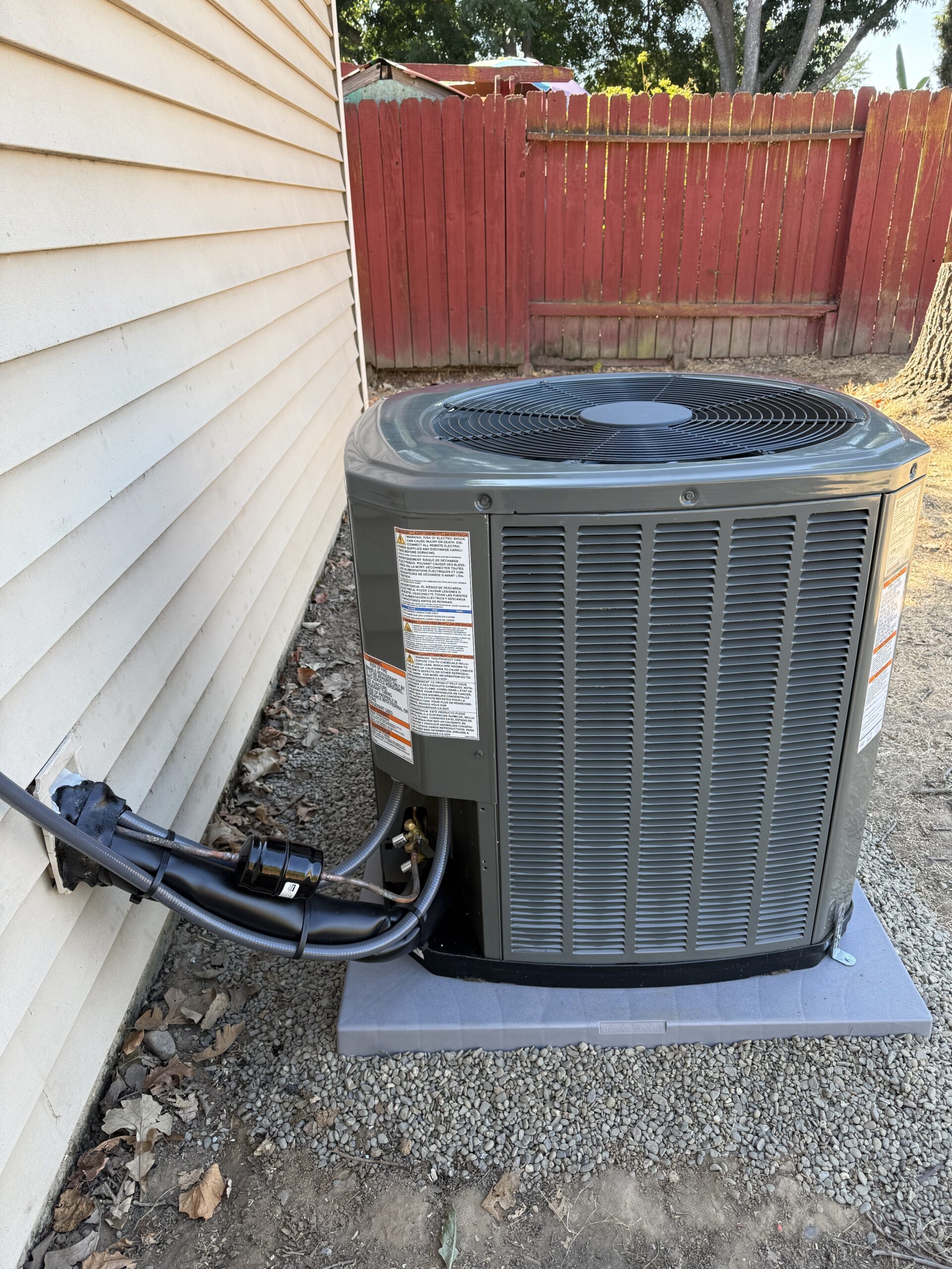
AC Unit Freezing Up in Summer? Questions People Ask
AC Not Keeping Up With Heat? What Our Service Calls Show

Sacramento HVAC Leader Mario Lopez Named to 40 Trades Under 40 Class of 2026
Questions or Concerns?
Fill out this form and our team will get back to you as soon as possible.
THE TRUSTED TEAM THAT PUTS YOUR HOME FIRST
Get expert service for your home today!


Homegrown service you can trust, built by a local.
Proudly serving the neighborhood we grew up in.